
Tow trucks are essential to keeping our roads safe, helping clear accident scenes, move broken-down vehicles, and assist drivers in distress. However, the very nature of towing often involves high-risk scenarios—working with large, heavy vehicles, dealing with accidents, and operating in busy, sometimes hazardous environments. Therefore, ensuring the safety of both tow truck operators and other drivers on the road is crucial.
In this blog post, we’ll take a closer look at tow truck safety protocols, the measures towing companies implement to protect their workers and the public, and why safety is a top priority in the towing industry.
The Risks Tow Truck Operators Face
Tow truck operators face a unique set of challenges. The most obvious risk is the environment: tow trucks frequently operate in high-traffic areas, at accident scenes, or during adverse weather conditions. These situations present various dangers, such as:
- Roadside hazards – Tow trucks are often positioned close to busy roads where they face the risk of being struck by passing vehicles.
- Heavy lifting – Moving and securing vehicles—sometimes at unusual angles or in precarious positions—can put strain on both the truck and the operator.
- Unpredictable situations – Tow truck operators frequently work at night, during bad weather, or on the side of the road, where visibility and control can be challenging.
- Vehicle handling – Properly securing and towing vehicles—especially those that are heavily damaged or have irregular shapes—requires significant skill and attention.
With so many risks at play, towing companies have implemented strict safety protocols to mitigate these dangers and ensure that both operators and drivers remain safe throughout the towing process.
Key Tow Truck Safety Protocols
To ensure safety, there are a range of protocols and procedures towing companies follow. These protocols are designed to protect both the tow truck operator and other drivers on the road:
1. Proper Training and Certification
Tow truck operators undergo specialized training to handle the challenges of towing safely. This training covers:
- Vehicle Handling Techniques – Learning the proper methods for securing different types of vehicles, ensuring they don’t move during transportation.
- Hazard Recognition – Identifying potential hazards on accident scenes or while driving, and knowing how to respond appropriately.
- Legal and Safety Regulations – Tow truck drivers must understand local road laws, safety codes, and towing regulations to ensure they comply with all legal requirements.
Additionally, some regions require operators to be licensed or certified to tow vehicles, which ensures that they have the knowledge and skill to operate safely in a variety of scenarios.
2. Using Personal Protective Equipment (PPE)
Personal protective equipment (PPE) is a cornerstone of safety protocols for tow truck operators. PPE can include:
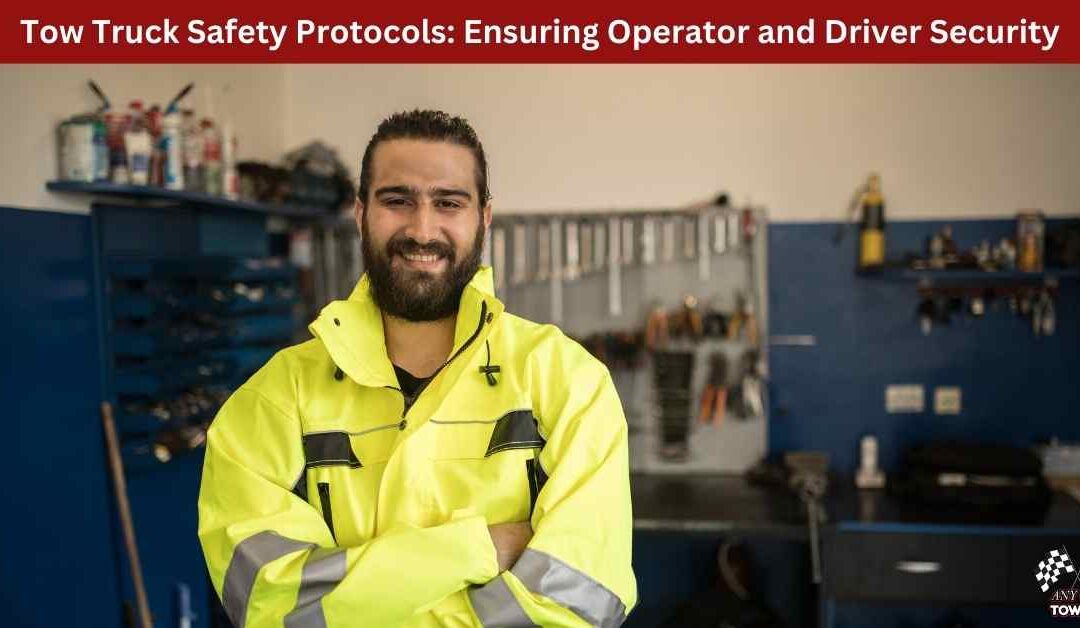
- High-Visibility Clothing – Tow truck operators wear reflective vests or jackets to ensure they are visible, especially when working near busy roads or at night.
- Hard Hats – In some situations, especially at accident scenes where debris or falling objects could pose a threat, hard hats are worn for added protection.
- Gloves and Safety Footwear – Durable gloves protect hands while securing vehicles or handling ropes, chains, or tools, and steel-toed boots protect the feet from heavy equipment or sharp debris.
By wearing proper PPE, operators reduce their risk of injury and increase their chances of reacting swiftly to any potential accidents.
3. Safe Vehicle Loading and Unloading
Loading and unloading vehicles is one of the most critical aspects of towing. To avoid damage to the vehicles or harm to the operator, towing companies follow strict procedures for handling vehicles:
- Use of Flatbed Trucks – For certain types of vehicles, particularly those that are severely damaged, flatbed towing is the safest option. The vehicle is secured without the risk of the wheels rotating, which can prevent further damage or complications.
- Wheel Lifts and Dollies – Tow trucks equipped with wheel lifts or dollies are often used to transport vehicles with minimal movement. This ensures that the car or truck is properly balanced and secured before it is hauled away.
- Load Distribution – Tow truck operators ensure that the weight of the load is evenly distributed, reducing the risk of tipping over or straining the tow truck.
Proper training ensures that these techniques are carried out correctly every time, minimizing the chances of injury or damage.
4. Traffic Control and Road Safety
Tow truck operators often work in high-risk environments, especially at accident scenes where the flow of traffic may need to be redirected or managed. To protect themselves and others on the road, towing companies implement specific protocols:
- Use of Warning Lights and Signage – Tow trucks are equipped with emergency lights and hazard flashers to alert other drivers of the potential dangers. Operators often use traffic cones, flares, or road signs to mark the scene and create a safe perimeter around the tow truck.
- Establishing a Safe Work Zone – When working near accident sites or on the side of the road, operators ensure that they create a safe zone for themselves, using barricades or a “buffer” area between the truck and oncoming traffic.
- Adhering to Speed Limits and Safe Distances – Tow truck drivers are trained to maintain a safe driving distance from other vehicles and adjust their speed based on road conditions and traffic flow.
These efforts prevent accidents and protect both operators and other drivers on the road.
5. Vehicle Maintenance and Equipment Checks
A key element of safety is ensuring that the tow truck itself is in good working condition. Regular maintenance and equipment checks help to prevent mechanical failures that could lead to accidents. Towing companies typically conduct:
- Daily Vehicle Inspections – Before going out on a job, tow truck operators perform visual inspections of the truck to ensure everything is working as it should—checking lights, brakes, tires, and towing equipment.
- Routine Maintenance – Regular servicing, including oil changes, brake checks, and hydraulic system maintenance, ensures that the truck is always ready for use.
Maintaining the truck in optimal condition minimizes the risk of breakdowns that could compromise safety during towing operations.
Ensuring Public Safety During Towing
While the safety of the tow truck operator is paramount, it’s also crucial to consider public safety during the towing process. Here are some ways towing companies protect other drivers:
- Proper Communication – Tow truck operators maintain clear communication with dispatchers and law enforcement to ensure that they are operating safely and that traffic disruptions are minimized.
- Safe Towing Speed – Tow trucks often travel at reduced speeds when hauling a vehicle, ensuring they have full control of the situation and can react quickly to any changes on the road.
- Clear Roadways – Towing companies work efficiently to clear accident scenes and other road hazards, preventing further collisions and ensuring that the road is safe for other drivers.
Final Thoughts
Tow truck safety protocols are essential to protecting operators, other drivers, and the vehicles being towed. By adhering to industry best practices such as proper training, equipment checks, safe driving, and effective traffic control, towing companies can minimize risks and ensure a smooth, secure process. In the fast-paced world of towing, safety is always the top priority—both on the job and on the road. By following these protocols, tow truck operators can confidently tackle any challenge while ensuring that everyone involved stays safe and secure.
Now Any Car Towing is available in Keysborough Victoria 3173.
Contact Us
Any Car Towing
10 Silvergum Pl, Cranbourne VIC 3977
0413 176 223
Recent Comments