
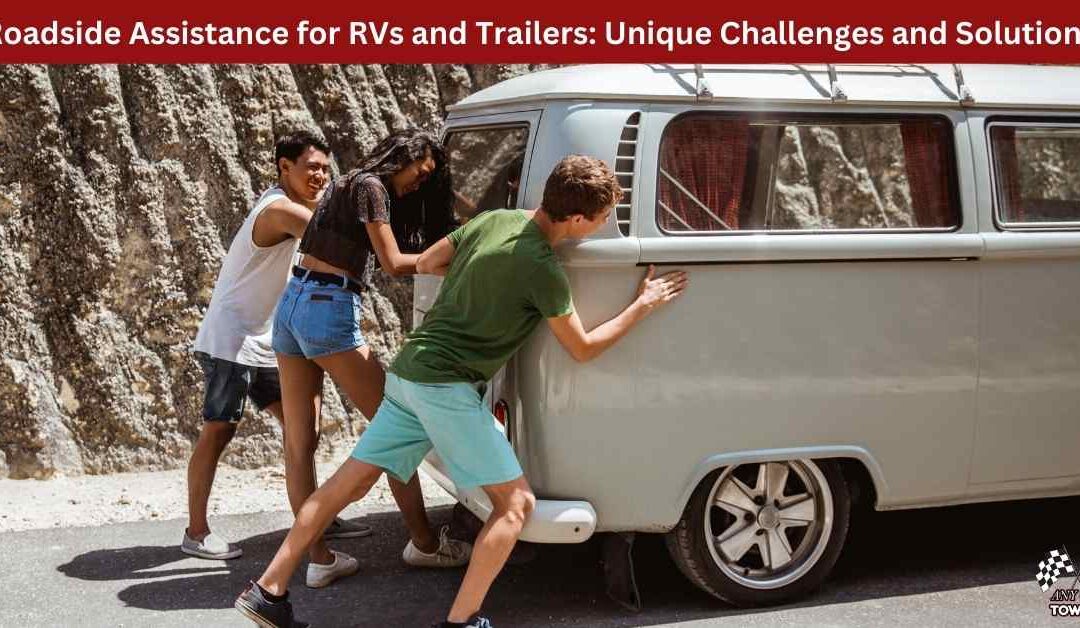
Traveling in an RV or towing a trailer offers a unique sense of freedom and adventure, allowing you to explore new places while bringing the comforts of home along with you. However, this freedom also comes with its own set of challenges, especially when you’re faced with a roadside emergency. Roadside assistance for RVs and trailers requires specialized knowledge and equipment, making it different from standard car or truck assistance. In this article, we’ll explore the unique challenges of roadside assistance for RVs and trailers and provide solutions to help you stay prepared on the road.
The Unique Challenges of RVs and Trailers
RVs and trailers are much larger and heavier than standard vehicles, which presents several challenges when it comes to roadside assistance:
- Size and Weight: The sheer size and weight of RVs and trailers mean that not all tow trucks are equipped to handle them. Towing an RV or trailer requires specialized equipment and expertise to ensure safe transport without causing damage.
- Limited Maneuverability: RVs and trailers can be difficult to maneuver, especially on narrow or winding roads. If you break down in a challenging location, getting a tow truck in position to assist can be a complicated process.
- Complex Systems: Modern RVs are equipped with various systems, including electrical, plumbing, and HVAC, that require specialized knowledge to repair. A breakdown in one of these systems might not be something a standard roadside assistance provider can handle.
- Multiple Axles: Trailers and some RVs have multiple axles, which can make tire changes and other roadside repairs more complex and time-consuming.
- Propane and Fuel: RVs often carry propane tanks and large fuel reserves, which can pose additional safety concerns during towing or roadside repairs.
Solutions for RV and Trailer Roadside Assistance
Given these challenges, it’s important to choose a roadside assistance provider that specializes in RVs and trailers. Here are some solutions to ensure you’re prepared for any situation:
- Specialized Roadside Assistance Plans: Look for roadside assistance plans specifically designed for RVs and trailers. These plans typically include services tailored to the unique needs of larger vehicles, such as heavy-duty towing, tire changes, and help with complex systems like plumbing or electrical.
- Heavy-Duty Towing Services: Ensure your roadside assistance provider has access to heavy-duty tow trucks capable of handling the size and weight of your RV or trailer. This is especially important if you’re traveling in a larger Class A motorhome or towing a large fifth-wheel trailer.
- Emergency Tire Repair and Replacement: RVs and trailers often have multiple tires, and a blowout can be more complicated than a simple car tire change. Choose a provider that can handle multi-axle tire repairs and replacements on the road.
- Technical Support for RV Systems: When traveling in an RV, you might encounter issues with the vehicle’s electrical, plumbing, or other systems. A good roadside assistance plan should offer access to technicians who can provide advice or direct repairs for these specialized systems.
- Safe Fuel and Propane Handling: In the event of a breakdown, it’s essential that the roadside assistance provider knows how to safely handle and transport vehicles carrying large amounts of fuel or propane. This ensures the safety of both the towing operator and your RV.
- Trip Interruption Benefits: Some roadside assistance plans offer trip interruption benefits, covering the cost of accommodations, meals, and alternative transportation if your RV or trailer breaks down far from home. This can be a lifesaver in a situation where repairs take longer than expected.
Tips for Preventing Roadside Emergencies
While it’s essential to be prepared for roadside emergencies, taking steps to prevent them can save you time, money, and stress. Here are some tips to help you avoid common RV and trailer breakdowns:
- Regular Maintenance: Keep up with regular maintenance on your RV or trailer, including checking tire pressure, fluid levels, and all mechanical systems. Regular inspections can help you catch potential issues before they become emergencies.
- Know Your Vehicle’s Limits: Understand the weight limits and towing capacity of your RV or trailer, and avoid overloading it. Excess weight can strain your vehicle’s engine, brakes, and tires, increasing the risk of a breakdown.
- Practice Maneuvering: Before setting out on a long trip, practice maneuvering your RV or trailer in a safe environment. This can help you feel more comfortable handling the vehicle in tight spaces or difficult road conditions.
- Plan Your Route: Plan your route ahead of time, considering the size and weight of your RV or trailer. Avoid roads that are too narrow, steep, or otherwise unsuitable for larger vehicles.
- Carry Emergency Supplies: Always carry a basic emergency kit, including tools, spare fuses, and extra fluids. Additionally, having a tire repair kit and a portable air compressor can help you deal with minor issues on the road.
Conclusion
Roadside assistance for RVs and trailers comes with unique challenges that require specialized knowledge, equipment, and services. By choosing the right roadside assistance plan and taking preventive measures, you can ensure that your adventures on the road remain safe and enjoyable. Whether you’re planning a cross-country journey or a weekend getaway, having a reliable partner for RV and trailer roadside assistance gives you the peace of mind to focus on the road ahead.
Remember, when it comes to RVs and trailers, it’s not just about getting from point A to point B—it’s about enjoying the journey. With the right preparations and support, you can overcome any roadside challenge and keep your travels on track.
Now Any Car Towing is available in Glen Waverley Victoria 3150, Australia.
Contact Us
Any Car Towing
10 Silvergum Pl, Cranbourne VIC 3977
0413 176 223
Recent Comments